Introduction
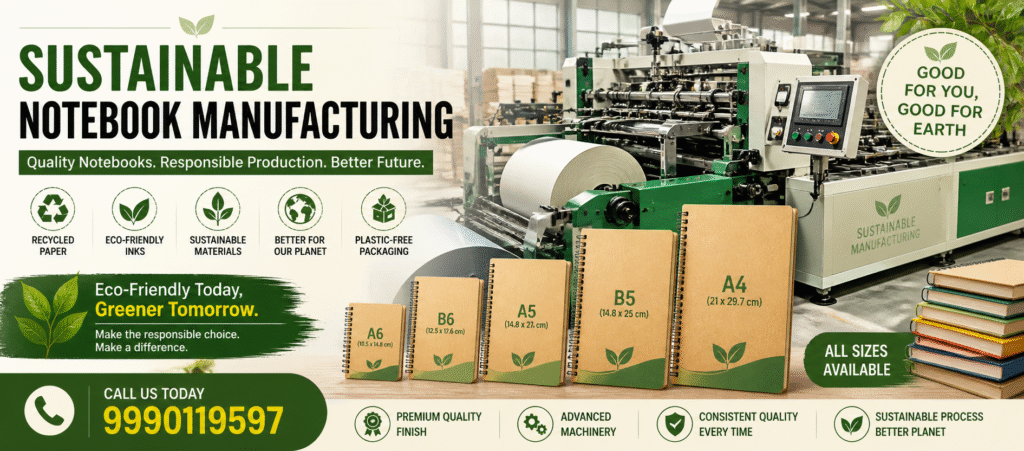
In a world where environmental concerns are becoming more urgent every day, businesses across industries are rethinking the way they operate. The paper notebook manufacturing industry is no exception. While notebooks may seem like simple everyday products, their production involves large-scale use of paper, water, chemicals, inks, and packaging materials. As awareness around sustainability grows, consumers are no longer just looking for quality and affordability—they also want products that align with environmentally responsible values.
This shift in consumer behavior has created a major opportunity for notebook manufacturers. Eco-friendly notebooks are no longer a niche product reserved for a small group of environmentally conscious buyers. Today, schools, offices, students, corporations, and government institutions are increasingly preferring sustainable stationery products. From recycled paper notebooks to biodegradable packaging and soy-based inks, sustainable notebook manufacturing is becoming an industry trend rather than a marketing gimmick.
For notebook manufacturers, adopting eco-friendly practices is not just about helping the planet. It is also a smart business decision. Sustainable manufacturing can improve brand reputation, open new market opportunities, attract conscious consumers, and create long-term profitability.
This article explores how eco-friendly practices are transforming the notebook manufacturing industry, the challenges manufacturers face, and why sustainability is likely to define the future of paper notebooks.
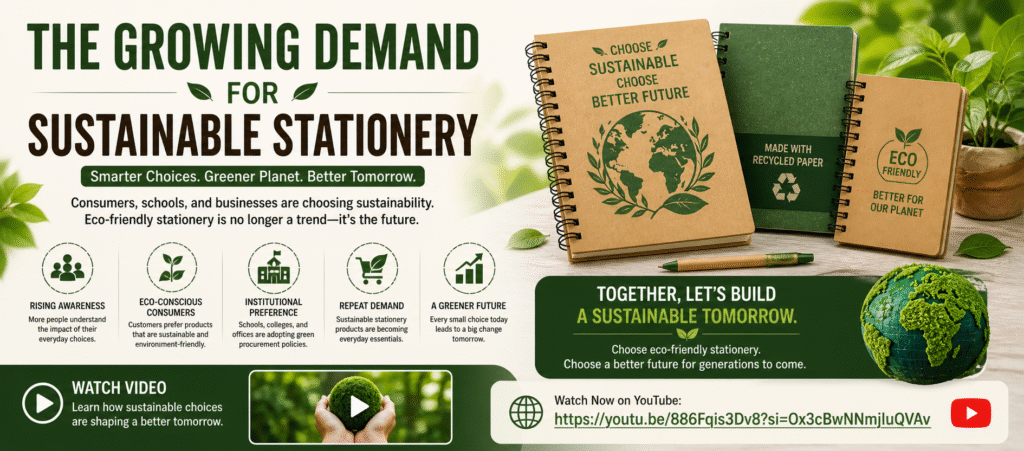
The Growing Demand for Sustainable Stationery
Consumer preferences have changed significantly over the last decade. People are paying closer attention to the environmental impact of the products they buy. This trend is especially visible in the stationery market.
Students and professionals use notebooks daily, making them recurring purchases. As a result, many buyers are now asking practical questions:
- Is this notebook made from recycled paper?
- Is the cover biodegradable?
- Was the manufacturing process environmentally responsible?
- Is the packaging plastic-free?
Brands that can answer “yes” to these questions are gaining a competitive advantage.
Educational institutions are also contributing to this trend. Many schools and colleges are introducing sustainability policies and encouraging students to use recycled materials. Corporate offices are similarly moving toward greener procurement policies, choosing office supplies from environmentally responsible suppliers.
Government organizations in many regions are also prioritizing sustainable sourcing. This creates a strong institutional demand for eco-friendly notebooks.
As environmental awareness continues to rise, manufacturers who ignore sustainability may find themselves losing relevance in the market.
Recycled Paper: The Foundation of Sustainable Notebooks
One of the most important aspects of sustainable notebook manufacturing is the use of recycled paper.
Traditional notebook production relies heavily on virgin paper, which requires cutting trees, consuming large amounts of water, and intensive chemical processing. In contrast, recycled paper reduces the need for fresh wood pulp and lowers environmental damage.
Benefits of recycled paper include:
- Reduced deforestation
- Lower water consumption
- Reduced energy usage
- Less landfill waste
- Lower carbon footprint
Modern recycled paper has improved significantly in quality. Earlier, many consumers associated recycled paper with rough texture or poor durability. Today, advanced processing technologies allow manufacturers to produce smooth, high-quality recycled sheets suitable for writing, printing, and premium notebooks.
For manufacturers, incorporating recycled paper may initially involve sourcing adjustments, but the long-term benefits often outweigh the challenges.
Eco-Friendly Inks and Printing Methods
Notebook production is not limited to paper alone. Printing and branding also contribute significantly to environmental impact.
Conventional petroleum-based inks contain volatile organic compounds (VOCs), which can contribute to air pollution and create disposal issues.
Many sustainable notebook manufacturers are switching to:
- Soy-based inks
- Water-based inks
- Vegetable-based printing solutions
These alternatives offer several advantages:
- Lower toxicity
- Easier recycling compatibility
- Better biodegradability
- Reduced chemical emissions
In addition to ink selection, manufacturers are optimizing printing processes to minimize waste. Digital printing, precise color calibration, and efficient batch management help reduce excess material usage.
Small changes in printing methods can collectively create meaningful environmental improvements.
Sustainable Cover Materials and Binding Options
Notebook covers and binding materials are often overlooked in sustainability discussions. However, these components can significantly affect a product’s environmental footprint.
Traditional notebook covers may include plastic lamination, synthetic materials, and non-recyclable coatings.
Sustainable alternatives include:
- Kraft paper covers
- Recycled cardboard
- Cloth covers made from natural fibers
- Biodegradable laminates
Binding methods are also evolving.
Instead of plastic spirals and synthetic adhesives, manufacturers are experimenting with:
- Metal wire binding
- Thread stitching
- Water-based adhesives
- Recyclable binding materials
These choices improve product recyclability and appeal to environmentally conscious buyers.
Plastic-Free Packaging Solutions
Packaging waste is a major environmental concern across industries, including stationery.
Many notebooks are individually wrapped in plastic sleeves or packaged using excessive synthetic materials.
Eco-friendly manufacturers are reducing packaging waste by using:
- Recycled paper wrapping
- Cardboard packaging
- Compostable sleeves
- Minimalist packaging designs
Plastic-free packaging offers dual benefits:
- Environmental responsibility
- Stronger brand positioning
Consumers often notice packaging before the product itself. Sustainable packaging immediately communicates brand values and builds trust.
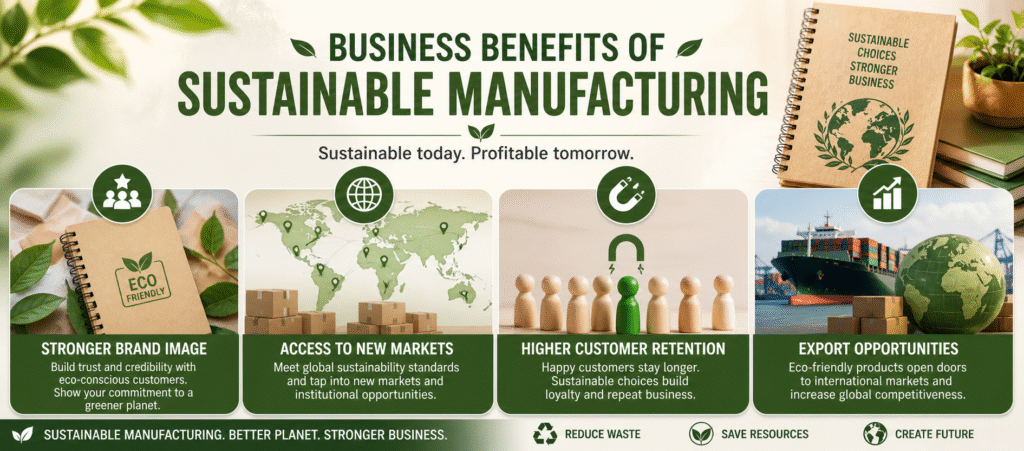
Business Benefits of Sustainable Manufacturing
Some manufacturers assume sustainability increases costs without providing sufficient returns. This view is increasingly outdated.
Eco-friendly notebook manufacturing can deliver substantial business benefits.
1. Stronger Brand Image
Consumers are more likely to trust and support brands that demonstrate environmental responsibility.
A sustainability-focused brand often appears:
- Modern
- Responsible
- Premium
- Future-oriented
This brand perception can justify better pricing and stronger customer loyalty.
2. Access to New Markets
Eco-friendly products appeal to:
- Schools
- NGOs
- Corporate offices
- Government tenders
- International buyers
Many institutional buyers now include sustainability criteria in supplier selection.
3. Higher Customer Retention
Customers who align with a brand’s environmental mission are more likely to make repeat purchases.
4. Export Opportunities
Global markets, particularly in Europe and North America, increasingly favor sustainable products.
Notebook manufacturers with eco-friendly production systems may gain access to valuable export channels.
Challenges in Sustainable Notebook Manufacturing
While the benefits are strong, transitioning to sustainable manufacturing is not without challenges.
Higher Initial Costs
Eco-friendly materials can sometimes cost more upfront, especially at smaller production scales.
Manufacturers may face increased costs for:
- Recycled paper sourcing
- Sustainable inks
- Eco packaging materials
However, economies of scale and growing demand are gradually reducing these cost differences.
Supply Chain Limitations
Finding reliable suppliers for sustainable raw materials can be difficult.
Consistency in quality, pricing, and delivery remains a concern in some markets.
Consumer Price Sensitivity
Although sustainability is valued, many buyers still prioritize affordability.
Manufacturers must strike a balance between environmental responsibility and competitive pricing.
Process Adaptation
Existing production systems may require modifications to accommodate sustainable materials.
This can involve:
- Equipment adjustments
- Staff training
- Testing and quality assurance
Despite these hurdles, many manufacturers find the transition worthwhile.
How Small Manufacturers Can Start Going Green
Sustainability does not require an overnight transformation.
Small notebook manufacturers can begin with manageable steps.
Start with Partial Recycled Content
Instead of switching entirely, begin with notebooks containing partial recycled paper.
Reduce Packaging Waste
Eliminate unnecessary plastic packaging wherever possible.
Offer Eco Product Lines
Introduce a separate sustainable notebook range to test market response.
Optimize Waste Management
Recycle production scraps and improve material efficiency.
Communicate Transparently
Clearly label sustainable features to educate customers.
Examples:
- Made with 70% recycled paper
- Plastic-free packaging
- Printed with soy-based ink
Small improvements can create meaningful impact over time.
The Future of the Notebook Industry
Despite digital growth, paper notebooks remain deeply relevant. Students still write notes by hand, professionals use planners, and creative individuals prefer physical brainstorming tools.
However, the future belongs to manufacturers who can combine functionality with sustainability.
Consumers increasingly want products that reflect responsible choices.
The notebook industry is moving beyond simple utility. A notebook is now also a statement about values.
Future trends likely include:
- Carbon-neutral manufacturing
- Seed paper notebooks
- FSC-certified materials
- Zero-waste production systems
- Circular economy models
Manufacturers who embrace these changes early will be better positioned for long-term growth.
Conclusion
Sustainable notebook manufacturing is no longer just an emerging trend—it is becoming an industry expectation.
As environmental concerns continue to influence consumer decisions, notebook manufacturers must adapt to changing market realities. Eco-friendly materials, recycled paper, sustainable printing, biodegradable packaging, and responsible production methods are shaping the next generation of stationery products.
For manufacturers, sustainability is not simply an ethical responsibility. It is a strategic opportunity.
Businesses that invest in greener practices today can build stronger brands, access new markets, improve customer loyalty, and future-proof their operations.
In the years ahead, the most successful notebook manufacturers will not just produce quality notebooks—they will create products that meet both practical needs and environmental expectations.
The notebook may be a simple product, but the way it is made can have a meaningful impact on the future of the planet.